
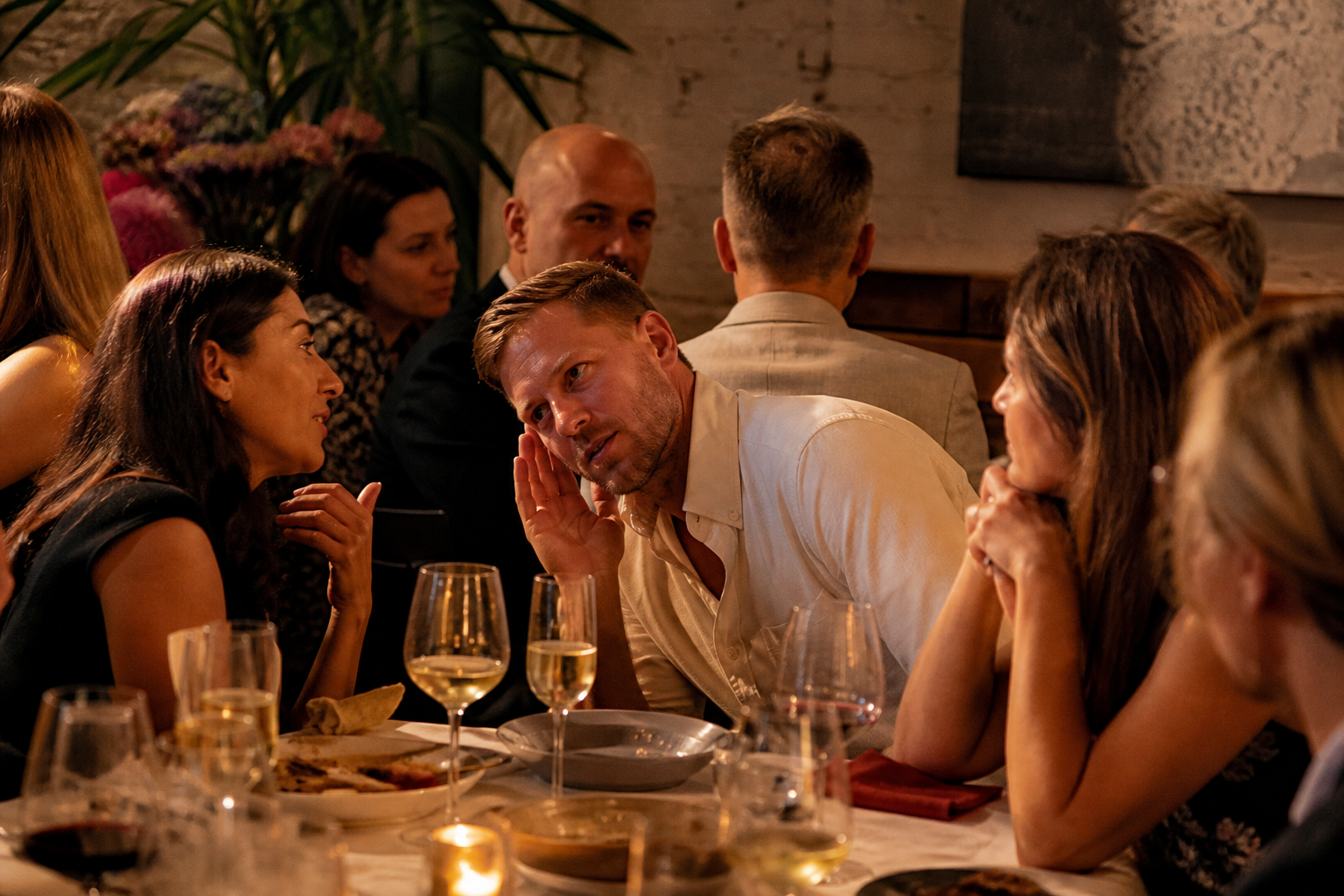
The brain is built for a hard trick: pull one voice from many. When that cocktail-party skill slips, lip-reading rises, fatigue follows, and people quietly leave the table. “I hear fine at home” does not rule out a problem. Home is usually one talker and little noise.
Three layers that mix
Peripheral loss that masks consonants in babble. Central processing and attention that fail with several talkers. Stress and tiredness that shrink reserve. Most people bring a mix, not one clean cause.
Noisy rooms are hard because the brain is working—not because you are careless.
What actually helps
Audiometry plus speech-in-noise. If you wear aids, noisy-place programs matter; one global setting often fails in a restaurant. Sit with your back to a wall and light on the talker’s face. For some people a CAPD work-up is next; for others it is wax and a simple tweak.
What a hearing aid can and cannot do in babble
A good aid does not turn a wedding into a studio. Directional mics improve the odds; they do not restore a twenty-year-old’s party. Aim for one step more understanding and less fatigue. Two lines after a real dinner beat another round of guessing at the desk.