
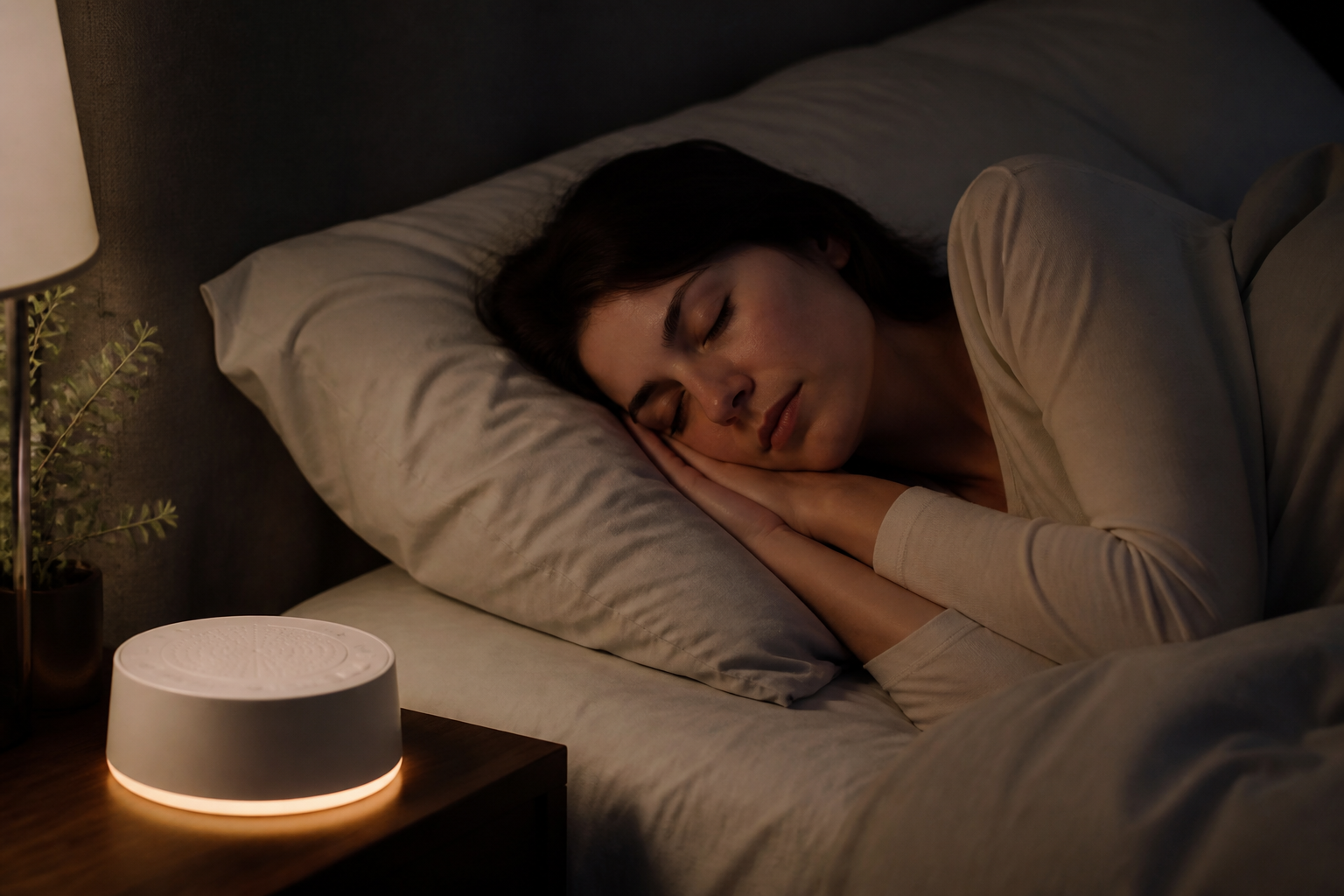
The auditory brain does not clock off at night. Poor sleep and ongoing tension scramble attention gain. Speech feels harder, tinnitus feels louder, and people assume the ear got worse. Sometimes the ear is the same; the brain’s filter got tighter.
Why sleep belongs in a hearing file
Attention and emotion networks weaken with sleep loss. Background tinnitus then takes center stage. Stress keeps the system hunting for threat—and inner sound gets treated as threat. That is biology, not “all in your head” in the dismissive sense.
- Steadier bedtimes; a little less evening caffeine
- Total silence is not always best; gentle steady sound can reduce tinnitus-checking
- Loud snoring plus daytime sleepiness: discuss apnea—night oxygen matters to the brain
Louder tinnitus during exam week or night shifts is not always new damage. Sometimes it is a more tired brain.
When night silence makes tinnitus louder
A dead-quiet room points attention at inner noise. Gentle steady sound often beats fighting silence. Exciting podcasts keep you up; boring sound is the point. If thoughts still spin, say so—we refer rather than preach “just relax.” Hearing files are sometimes household files. Better sleep is how the next day hears.